
Buying high-quality equipment is only the first step. As an experienced overhead crane manufacturer, we know that true ROI comes from precise installation and consistent care. Poor setup leads to premature wear, safety risks, and expensive downtime.
🏗️ Part 1: Crane Installation — 4 Key Points to Avoid Failures
Your equipment’s lifespan is decided during the first few days of setup. As a professional overhead crane manufacturer, we insist on these four standards:
1. Foundation & Bolt Precision
Uneven settling causes structural stress. Verify that ground bearing capacity matches the wheel load. Embedded bolt deviation must be kept within ±2mm to avoid structural weakness.
2. Track Alignment: The Secret to Smooth Travel
Misaligned tracks cause “crabbing” and motor strain.
-
Straightness: Error must be ≤2mm per meter.
-
Expansion Gaps: Leave 1-2mm at joints to allow for thermal changes.
3. Electrical Standards & Safety
Wiring errors lead to short circuits. All metal structures must be grounded with a resistance of ≤4Ω. As a safety-conscious overhead crane manufacturer, we recommend protective conduits for all cables.
4. Acceptance Testing: Prove the Load
Never skip the load test.
-
Static Test: Lift 125% of the rated load to check for deformation.
-
Dynamic Test: Lift 110% to verify brakes and (Internal Link) performance.
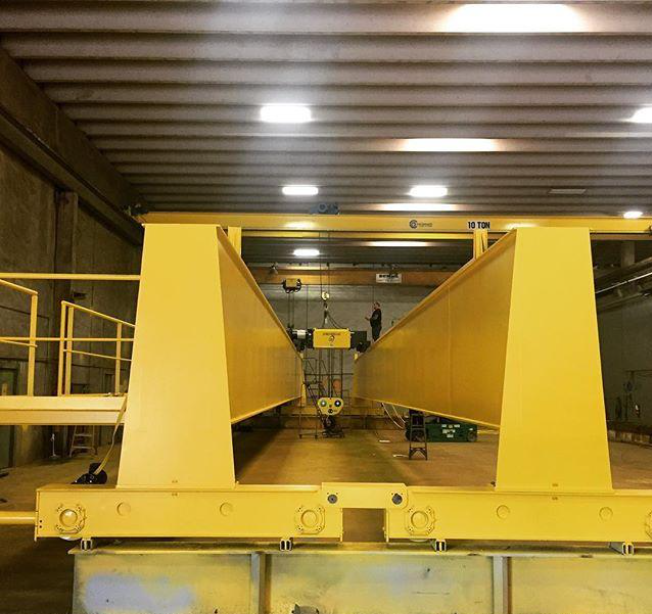
🔧 Part 2: Maintenance Routines to Extend Equipment Life
A crane is like a high-performance vehicle; ignore the maintenance, and the system fails. Following a routine provided by your manufacturer ensures maximum uptime.
-
Daily: Check wire ropes for broken strands and clear debris from the tracks.
-
Monthly: Lubricate wheel bearings and rail joints with lithium-based grease.
-
Annual: Test motor insulation and verify all safety limit switches.

🚨 Part 3: Troubleshooting Common Issues
-
Stiff Movement: Usually caused by track debris or uneven wheel wear.
-
Unusual Noise: Often a sign of dry bearings. Check lubrication immediately.
👉 [Download the Free Checklist Here]
(Includes: Foundation Prep, Track Tolerance, Daily Inspection Log, Annual Test Record)